5 July
A prayer for the rice.
MyokoMurungThe music festivalThe valley
Dree is the agricultural rite of the Apatani. The rice is in the terraces and not yet safe. Insects, blight, a bad turn in the weather, and illness in the village are what the prayers are aimed at. The month is called, in Tanii, the Dree month. The common day, kept across the valley, is 5 July.
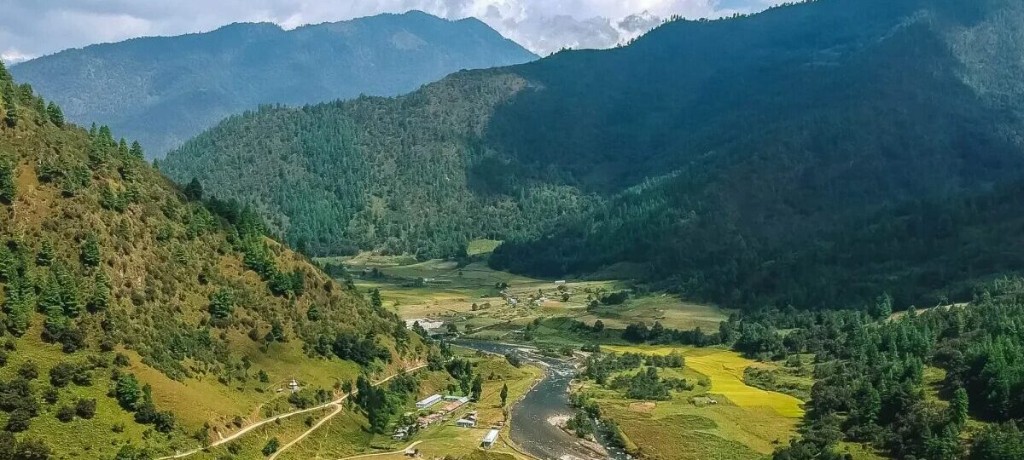
The photograph above is the valley floor, the river and the fields. It is not a photograph of the rite. There is no picture on this page of the altar or the priest, because those were not given to the house to publish.
We are in Mudang Tage, one of the villages on that floor. We farm and live inside the same year. If you stay with us around 5 July, we'll tell you where the gathering is and how to be part of the day.
What is asked
Five names, and a field that has to last.
The district’s own account of Dree names five who are addressed. Spellings move from writer to writer. The work each name is given does not.
- Tamu
- Asked to keep insects and pests off the crop.
- Metii
- Asked to keep illness out of the people.
- Meder
- A cleansing of the field, so what would spoil the rice is sent off.
- Mepin
- Asked for a sound crop and for the people who depend on it.
- Danyi
- The sun. Asked for the soil, the fish in the paddy water, the cattle, and the household.
An Apatani field holds rice and fish in the same water. Danyi’s share of the prayer is the soil, the fish in the paddy, the cattle, and the household. A Danyi altar was not part of the older village rite. It was raised for the first time at the common ground in 1967, when Millo Kacho, a gaon bura of Tajang, gave a mithun for the common feast.
The older rite is a plea, not a harvest party. The grain is still on the stalk. Cucumber is what can be cut and handed out. People call that gift dree taku. The drink is dree o, beer of rice or of millet. The women of the valley brew it for the guests and the common meal.
The date
One date, from 1967.
For a long time each village opened Dree on a day its own elders picked, in June or July, without asking the next village. There was no one ground. Lod Kojee, then a student, had been to other people’s festivals, Mopin among them, and wanted one date the whole valley could share. Myoko and Murung could not be moved without breaking them. Dree, he wrote later, had room to be gathered if the village rite was left standing. In May 1967 he and Gyati Challa went to Shillong and asked the administration for help. P. N. Luthra, then Adviser to the Governor, gave a grant and agreed to come.
On 3 June the villages met at Old Ziro and could not agree a ground. A committee walked the sites. Nenchalya, near the school at Hija, was the one that sat in reach of everyone. Elders in Hija and Dutta were not sure a crowd from every direction belonged on their land. Tage Tade of Mudang Tage, a priest, read a chicken liver and found no sign of the famine they feared. The ground was accepted. Luthra opened the first common Dree there that June. Cucumber was handed out as the first healthy cut of the season, and there was not enough of it. From the next year the common day was 5 July, so the fruit had time. That date has held.
The village rite is still the day before. On 4 July the priests keep Dree in their own villages, in the dress and the short procession the rite already had. On 5 July the valley gathers: a guest is received, a flag is raised, and the day has dances, games, and speeches. Daminda is the dance the valley names. The common gathering has been public for more than fifty years. The prayer under it is older.
After
The fields are left alone.
When the festival is over, people stay out of the terraces for a while, and they don't go into the forest to cut. How long that quiet lasts is for the village to decide. If the paths are empty after the 5th, the rice is simply being left in peace.
If you are with us on 6 July and the paths between the plots are quiet, that quiet is part of the festival. The request has been made, and the rice is being left alone. Please stay on the paths. The light is beautiful from there, and the fields belong to the families who tend them.
At the house
5 July is a known day. The room is not guaranteed.
Unlike Myoko, you don't have to ask whose turn it is. Dree is the valley's day. Our house will still be a family house: relatives, food, and the hours the festival takes. Rooms in Mudang Tage are few, and this week fills up. Book early and we'll save you a bed.
Book a room and tell us the dates. If you'd like to be at the gathering on the 5th, ask us where it is being held that year. We'll walk you through how to join it kindly.
Dree is not Myoko. It is not Murung. The music festival in September is a different kind of crowd, on a different kind of invitation.
The river and the fields were given for the valley pages. They are not a picture of Dree. The account of 1967 and of the five names follows the district and the Apatani writers who recorded how the common day was fixed. Spellings of the names vary.